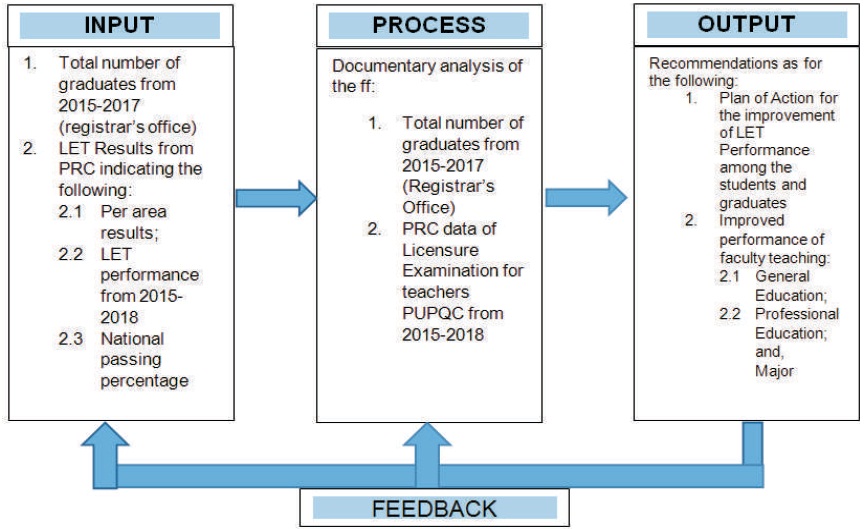
Figure 1. Conceptual Paradigm of the Study
Licensure Examination for Teachers' Performance is one of the predictors of quality education offered by Teacher Education Institutions (TEIs). Many among the Teacher Education Institutions in the country have taken a closer look at their graduates' performance and used this as a basis of reflection on what particular enhancement should be done to improve the program. This study, therefore, identifies the strengths and weaknesses of the current education program when it comes to the teaching and learning process in the Polytechnic University of the Philippines Quezon City (PUPQC) Branch. A comparison between the lists of graduates provided by the school with that of the list provided by Philippine Professional Regulation Commission was done to evaluate the individual student's board exam mean rating according to date of examinations and year of graduation. The percentage of rating of first takers, repeaters, passers, and failed takers were included in this study and used for analysis of data. The study aimed to evaluate the performance Bachelor in Business Teacher Education Graduates to the Licensure Examination for Teachers from 2015-2018. It also provided data as to how many graduates push through with the Licensure Examination successfully, what particular area the graduates and the students of Education need enhancement activities or any particular program of action for the PUPQC administration and faculty members to undertake. Based on the findings of the study, the researchers recommended a plan of action as to how to improve the LET performance, considering also the repeaters and those who failed in taking the examination.
The pivotal role played by education to growth and development of an individual cannot be underestimated (Ngugi & Mumiukha, 2016). The Philippine Teachers Professionalization Act of 1994 Article 1, Section 2 also provides that the state recognizes the vital role of teachers in nation-building and development through a responsible and literate citizenry. Towards this end, the state shall ensure and promote quality education by proper supervision and regulation of the licensure examination and professionalization of the practice of the teaching profession. This has to be monitored by the Professional Regulation Commission (PRC) and the Board for Professional Teachers (BPT). Hence, making it one of the requirements before a teacher could teach specifically in the public school system.
As cited by Yingqiang and Yongjian (2016) that quality assurance in modern higher education is both an accountability-oriented ideology and a technological method. Likewise, McKinsey report on education in 2007 once quoted by Gardner (2008) that the quality of an education cannot exceed the quality of its teachers. He further added that the three things that matter in top school systems are the following: getting the right people to become teachers, developing them into effective instructors, and ensuring the system is able to deliver the best possible instruction for every child. As such, quality education can be linked into working condition (Ashraf, 2019), and that teaching strategies to integrate the goal of education for sustainability and multicultural education (Nolet, 2017). Therefore, quality education emphasizes holistic development, equip students with the knowledge, and skills for the future (Ng, 2015).
It is noted by Masters (2013) that achievement is strongly influenced by the quality of teaching, parental support and expectations, and student effort, much with this, the World Bank in 2014 report has identified issues pertaining to teachers' professional development; 1. Professional development opportunities currently offered to teachers frequently fail to meet even minimum levels of quality and fall short of what teachers want and need; 2. Systems at the school level to support teachers and identify their professional development needs are not working well and 3. Utilization of budget allocated for human resource training and development is often low, amounting only 57 percent of the budget in 2014. In 2013, RA 10533 (K to 12 Reform) was signed into law which prompted the following: need to revisit NCBTS as a framework for teacher quality, and, address teacher quality requirements in the K to 12 (e.g., content knowledge and pedagogy, and career stages); then it is work on teacher standard that was approved in 2012 the Joint Advisory Board chaired by Former Sec. Armin Luistro of the Department of Education. This opens the opportunities for the Philippine Professional Standards for Teachers to be implemented under the DepEd No. 42, s., 2017. This can be concluded that the strength and success of an educational system largely depend upon the quality of the teachers and this can be measured by their performance in the licensure examination (Dato-on, Ungui, Lepon, & Del Rosario, 2017).
Considering the number of graduates, the Polytechnic University of the Philippines has produced every year which proves its contribution to the economic welfare of the country that accordingly, Sahito and Vaisanen (2017) identified that the radical reforms for educational and economic development can be brought through better understanding of the phenomenon of the quality education with support to teacher educators, students, and heads. One of the pioneering programs in PUP is the then Bachelor in Business Education, Bachelor in Business Teacher Education and now the Bachelor in Business Technology and Livelihood Education, is only the education majoring program in the University since 1904 with Bachelor in Secretarial Education, has consistently produced graduates who can work as a teacher and in an office setup.
It is among the history of Polytechnic University of the Philippines that an intermediate curriculum was prescribed in addition to subjects, such as typewriting, bookkeeping, and stenography. Afterward, a four-year secondary course in commerce was offered in addition to the courses in Bookkeeping, Stenography, Typewriting, and Telegraphy. Hence, the Bachelor in Business Teacher Education program was conceptualized following the concept of offering an intermediate curriculum. Therefore, BBTE is a four-year degree program with two specializations in 2011 curricular program, business technology, and livelihood education; and information technology education. Whereas, the major business technology and livelihood education, expected the graduates to teach effectively across the learning areas in the elementary, secondary, college, and vocational/technical schools the courses in the office and business technology (office procedures, keyboarding, shorthand, bookkeeping, accounting, business mathematics, management, marketing, entrepreneurship, merchandising, and computer education) as well as in livelihood education courses (home technology, food, cosmetology, basic drafting, basic electricity, basic electronics, plumbing, carpentry, and masonry). While, those majoring in information and technology education, graduates are expected to teach effectively and intensively information and technology subjects across the learning areas in the elementary, secondary, college, and vocational/technical schools.
The then, College of Office Administration and Business Teacher Education (COABTE) were merged that both aligned the programs, where students are prepared for entry into and advancement in jobs within the general business office at the same time.
In the history of the Polytechnic University of the Philippines, the Bachelor in Business Teacher Education program uses a unique curriculum, thus making it a pioneering course in the university. Choices were made that if a student has a head for business and a heart for teaching, they might consider a career as a business teacher. Business teachers deliver the skills and knowledge necessary for students to function as responsible citizens in the business world and in their personal lives. Business teacher education also prepares students to be entrepreneurs/ business owners, and also teachers in public, private, and in institutions of higher learning.
The Licensure Examination for Teachers (LET) is used to check the quality of the graduates of Teacher Education Institutions (TEIs) in the country; what kind of standard the school has implemented. It is also used as a basis of TEIs existence in the field, which is highly accorded with the pertinent provisions of the Constitution that the State “shall protect and promote the right of all citizens to quality education at all levels” of Article XIV, Section 1.
A high percentage of passers in the Licensure Examination for Teachers (LET) is one of the major indicators of the competence of the Teacher Education Program (TEP) graduates of State Colleges and Universities (Esmeralda & Perez-Espinosa, 2015; Ballado-Tan, 2014). This is also one of the qualifications to be a part of the teaching workforce, specifically in the Public School system in the country. This examination is used to test and identify the desired competence of professional teachers.
Looking at the lenses of quality education, one of the pressing concerns is about the students and graduates turn-out. This is highly valued by most accrediting agencies, where State Universities and Colleges are at stake and competing with. There is a need to analyze the results of LET through the three components of the academic areas, such as General Education courses, Professional education courses, and the majoring courses. As cited by Chan-Rabanal (2016) that Navarro et al. in 2003 quoted “significant problems confronting higher education in the country have continuously resurfaced with the mass graduation of dysfunctional college graduates who are ill-prepared to join the country's labor force are the most evident. Various World Bank-funded studies on the current state of Philippines higher education have unanimously described the level of education as “very sick”. The Congressional Commission on Education (EDCOMM), which the Congress of the Philippines created in 1990 to review the status of higher education gave the following significant findings:
1) Mismatch between industry needs and academic training of students in colleges and universities is very evident;
2) Colleges and universities were offering courses in oversubscribed areas of studies, e.g. commerce, education and the like, irrespective of national development needs;
3) State-supported institutions were competing with the private sector in the field. At great cost to the government, these state institutions were not producing quality graduates as expected;
4) The poor quality of graduates in higher education was attributed to poor quality teachers, inadequate teaching and learning facilities, and ill-structured curricular offerings.
Today, aspiring teachers must undergo a series of hurdles to obtain and maintain a license to teach, and that is to pass the licensure examination for teachers. This is also true wherein the State uses licensing to ensure that only the qualified ones can be hired and be part of the teaching force. Therefore, much is expected from the TEIs, a very challenging responsibility has to be carried out from the LET results and up to the time that graduates have to take their own role of teaching. Every teacher education graduate is required to take the LET in order to practice his profession. To pass the examination, graduates should obtain a passing rate of 75% in the three areas: General Education, Professional Education, and their Specialization.
One of the programs offered in the PUPQC Branch is the Bachelor in Business Teacher Education, which has been part of the PUP System for almost 20 years. The good performance in LET by the graduates has to be given a closer analysis since it is the only program among the five programs existing in PUPQC to have a license afterward. It is under this premise that this study was conducted to look into the performance of Bachelor of Bachelor in Business Teacher Education graduates in different subject of specialization and generally analyzed the results of the Licensure Examination turn-out from 2015-2018 of March and so, too, answering the question if it is time to rethink the teacher education stakeholders' current practices.
The present study made use of the Input-Process-Output Scheme of environmental scanning. Figure 1 contains the Input Box indicated the number of graduates as requested from the PUPQC Registrar's office, LET results requested from the Professional Regulation Commission (PRC), which indicated the per area results; LET performance from 2015- March 2018 and, National Passing Percentage. Likewise, Process Box contains the documentary analysis which the researchers utilized and the Output Box for which the study intends to produce such as: Plan of Activities for the improvement of the Licensure Examination Result, such as Continuing Faculty Development Program, maximizing field study courses for review, expand the utilization of national diagnostic assessment, incorporating seminars as part of the requirements of the students, and encouraging students to take National Certification Examination in TESDA.
Figure 1. Conceptual Paradigm of the Study
From the presented title of the study “Performance of the PUPQC Bachelor in Business Teacher Education Graduates in the Licensure Examination for Teachers for the Year 2015- 2018: An analysis” focused only on the data that were gathered from the Professional Regulation Commission as per the result of the LET from 2015-2018 as requested by the researchers.
The pertinent data were used to analyze the LET performance of the Bachelor in Business Teacher Education graduates; hence, it sought to answer the following questions:
(i) General Education courses;
(ii) Professional Education courses; and,
(iii) TLE/major courses?
(i) First Time Takers; and,
(ii) Repeaters?
(i) March Takers; and,
(ii) September Takers?
Basically, this research is an analysis of the performance of PUPQC BBTE graduates in the Licensure Examinations for Teachers from September 2015 to March 2018; September of 2018 Takers was not included since the result of the examination was to be provided this November 2018.
Therefore, a descriptive qualitative research was utilized with documentary analysis from the data requested from the Professional Regulation Commission for the results of LET and PUPQC Registrar's office for the number of graduates.
The analysis extended further by taking the ratings per subject per examination date to find out which board courses; general education, professional education, and major (TLE) the graduates LET takers had the lowest turn-out from 2015-2018.
The researchers started this study by simply requesting from the Professional Regulation Commission, the result of PUPQC LET Results from the year 2015-2018 including the National Percentage result. On the other hand, the list of graduates from 2015-2017 was requested from the Registrar's office of the PUPQC Branch and its names were checked against the list of LET Passers from 2015-2018.
The list of graduates from 2015 to 2018 of Bachelor in Business Teacher Education was requested from the registrar's office. This list was compared and verified with the actual list of LET passers from the requested data from the Professional Regulatory Commission. The number of those who took and did not take the exams was accounted for.
The raw data of each LET examinees were gathered and processed. The list of passers of 2015-2018 was gathered and check against the list of graduates who took the LET examination were considered in this research paper.
The Polytechnic University of the Philippines, QC Branch has already been part of the whole PUP System since 1998. Hence, in its 20 years of existence, it has already contributed a number of professional teachers who are now engaging to teach public and private schools in the Philippines.
To show the responsiveness of the program, the results provided in this part of the paper provides a deeper analysis if the objectives of the program are really met.
Table 1 presents the total number of graduates from 2015- 2017 and those who took and passed the Licensure Examination for Teachers from 2015-2018.
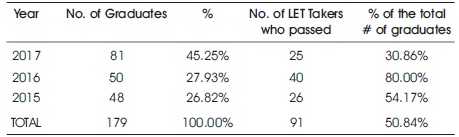
Table 1. PUPQC Number of BBTE Graduates Who Took and Passed the Licensure Examinations for 2015-2017
The data revealed that out of 81 graduates of 2017, a meager number of 25 or 30% of the graduates who successfully passed the Licensure Examinations in both 2017 and 2018, while there are about 70% who are not yet taking the LET. The bulk of those who took and passed the licensure examination was on 2016, with 40 or 80% out of 50 total number of students who graduated in the program with only around 10 or 20% who are not yet taking the exam. Meanwhile, in 2015 graduates of 48 students, 26 or about 50% already took and passed the Licensure Examination while there are still 50% who are not yet taking the Licensure Examination for Teachers.
From the total of 179 graduates of the program from 2015- 2017, there were only 91 or around 50% successful examinees of the Licensure for Teachers.
Since, the 2011 BBTE Curriculum is in accordance with CMO No. 30 Series of 2004, prepares the students in two job opportunities either as a teacher or an office worker. The business concepts and skills learned up in the 2nd year curriculum is a ladderized curriculum, where the students can already work as a secretary. While the 3rdand 4th year levels, focused on the methodologies, professional education, and some TLE major subjects to prepare them in teaching post.
A closer look at LET results show that it is composed of three parts: the General Education (GE courses) which consists of the following subjects: English, Filipino, Mathematics, Science, Social Sciences, and Information and Communication Technology (ICT); the professional education (Prof. Ed.), which include Child and Adolescent Development, Facilitating Learning, Principles of Teaching, Teaching Profession, Social Dimension of Education, Assessment of Student Learning 1 and 2, Curriculum Development, and Assessment of Learning; and the different major courses in Biological Science, Physical Science, Mathematics, Music, Arts and Physical Education and Health (MAPEH), Technology and Livelihood Education (TLE), Social Studies, English, and Computer Education.
Table 2 presents the licensure examination for teachers' performance of PUPQC BBTE graduates per area for 2015- 2018 for the month of March Takers.
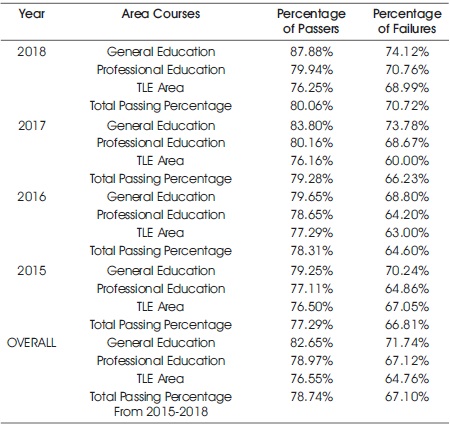
Table 2. Licensure Examination for Teachers' Performance of PUPQC BBTE Graduates Per Area for 2015-2018, March Takers
It could be noted that from 2015-2018, the consistently highest passing percentage registered to the General Education courses, with an overall general rating of 82.65% from 2015-2018, where the highest percentage was 87.88% in 2018 with the lowest percentage registered in 2015 with 79.25%. However, in the TLE or major course, the LET takers had been consistently received the lowest rating with an overall general average percentage of 76.55% where the highest registering year was on 2016 with only around 77.29% and the lowest percentage was on 2017 with 76.16% only. While in professional education courses, showed only of average performance with 80.16% in 2017 as the highest percentage result while the lowest was in 2015 with 77.11% only.
On the other hand, the highest percentage of failed takers was in 2018 at 71.29%, while the lowest was registered in 2016 with only around 65%.
The data proves that among the three courses, the graduates perform poorly was on the major course, with just a meager percentage to professional education course; while performing well in general education course in any of the years the graduates took the LET.
It could be gleaned from Table 3 that in September Takers of the Licensure Examination for Teachers, 2017 graduates registered the highest percentage of passers in General Education course with 88.23% the same way with professional education subjects with 81.93% percentage of passers. This was followed by the year 2016, with General Education percentage of passers of 85.90%.
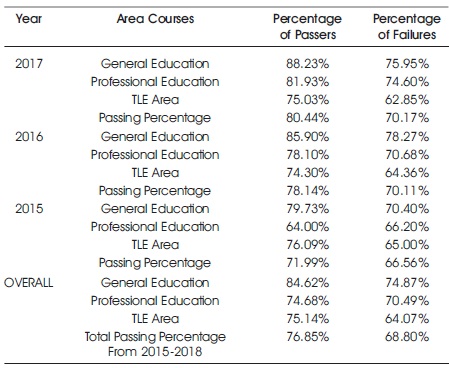
Table 3. Licensure Examination for Teachers' Performance of PUPQC BBTE Graduates Per Area for 2015-2017, September Takers
While there is a big discrepancy on the percentage of passers of General Education and major course, but in 2015 percentage of passers in professional education registered the lowest with only 64% with TLE 76.04%, 12% higher than professional education.
Hence, there is a much to be given in both the TLE and professional education course. Chan-Rabanal (2016) revealed in her study that academic achievement is significantly related to LET performance and that educational institutions should continue to seek professional development ventures for the improvement of teaching competence and professional preparations. Thus, come out with quality output in the success of board examination leading graduates towards employment.
Table 4 presents the overall performance in the Licensure Examination for Teachers of the BBTE graduates from 2015- 2018.
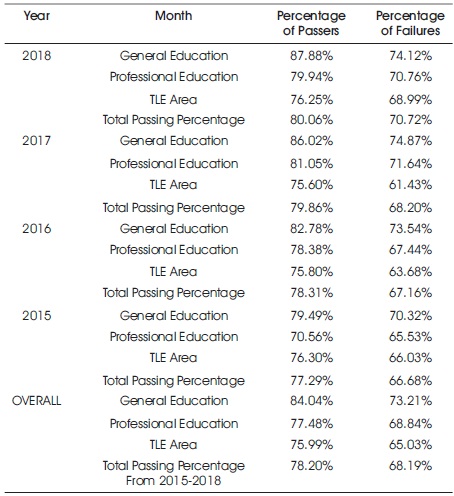
Table 4. Overall Licensure Examination for Teachers' Performance of PUPQC BBTE Graduates Per Area for 2015-2018
It is noticeable that 2018 LET takers got the highest total passing percentage of 80.06% vis-à-vis the total graduates failed in the LET with only 70.72%. A matter of 10% higher than those who failed in the examination.
It is also noted that General Education course items in the examination got the highest passing percentage of 84.04%, followed by professional education courses with only around 77.48% and consistently resulted as the lowest is the TLE or the major course of only around 76%. The total passing percentage PUP QC Branch was able to register from 2015-2018 is 78.20%.
It could be gleaned from Table 5 the LET performance of PUPQC BBTE graduates first time takers for the year 2015- 2018.
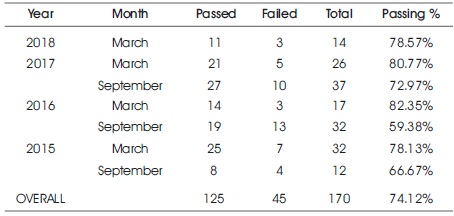
Table 5. Licensure Examination for Teachers' Performance of PUPQC BBTE Graduates First Time Takers in 2015-2018
It could be noted from Table 5 that first time let takers performance is higher than what is expected. The biggest percentage of passers was on March 2016; with 17 aspirants 14 were able to pass and 3 failed in the exam registering 82.35% passing percentage, followed by those who took the 2017 March examination with 26 aspirants, 21 were made it and only 5 failed to succeed registering 80.77% passing percentage. While the lowest passing percentage was on September 2016 with 32 aspiring teachers, only 19 were able to make it and 13 failed in the examination giving a very low passing percentage of 59.38%.
The data shows too that the lowest percentage of passers was during the September period of the year, where the group of newly graduated students is included or for the first time takers.Table 6 presents the data of PUPQC BBTE Graduates LET Repeaters for the year 2015-2018.
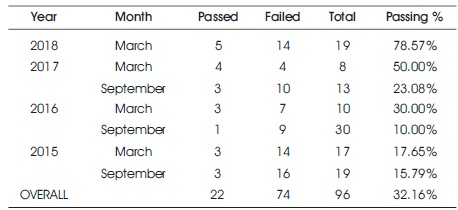
Table 6. Licensure Examination for Teachers' Performance of PUPQC BBTE Graduates Repeaters in 2015-2018
With an overall BBTE Graduates LET Repeaters of ninety-six (96), only 22 or 23% successfully passed the Licensure Examinations and around 77% or 74 failed in the LET hence the overall passing percentage for 2015-2018 is only around 32.16%.
The lowest percentage of repeater-takers of the LET was on 2016 of September with only 1 successful examinee out of 10 aspirants, followed by September 2015 registering only three (3) passers out of 19 aspirants.
This meant that there is much to be done in the case of the repeaters, this data is already an eye-opener for PUPQC administration to provide programs, intended to assist the repeaters in the next batch of students to take the LET.
Table 7 revealed the overall performance in the Licensure Examination for Teachers of BBTE graduates from 2015- 2018.
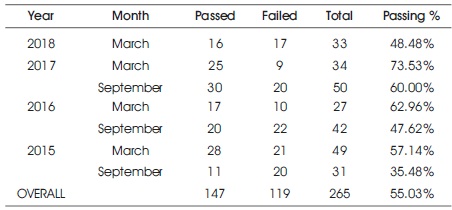
Table 7. Comparative Analysis of BBTE Graduates' Overall Performance in the Licensure Examination for Teachers for 2015-2018
Following the data in Table 7, the highest percentage rating was on 2017 of March, registering 73.53% with 25 passers from 34 aspirants and the lowest passing percentage rate is 35.48% in 2015 of September, only 11 successful examinees out of 31 aspirants. The overall passing percentage rating was only 55%, 147 out of 265 aspiring professional teachers.
The problem of quality education is really one of the pressing concerns by the TEIs. There have been so much to be done in the case of teachers; hence, this is the very reason why graduates of TEIs may not be able to pursue a teaching career.
Meanwhile, Table 8 presents PUPQC national passing percentage to contribute in the list of the country's professional teachers from 2015-2018, which is only around 34.29% national passing percentage. Wherein, the 2016 result provided the highest national passing percentage of 46.37% and the lowest national passing percentage was in 2017 with 25.46% only.
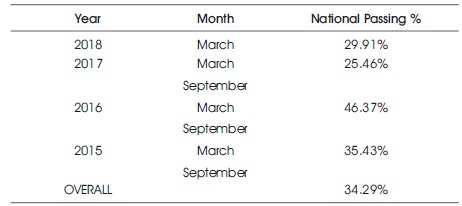
Table 8. PUPQC National Passing Percentage in the Licensure Examination for Teachers for 2015-2018
It is clearly stated in this table that PUPQC Branch has consistently produced professional teachers above the national passing percentage set for the Licensure Examination for Teachers for the last 4 years.
The data revealed that out of 81 graduates of 2017, a meager number of 25 or 30% of the graduates who successfully passed the Licensure Examinations in both 2017 and 2018, while there are about 70% who are not yet taking the LET. The bulk of those who took and passed the licensure examination was on 2016, with 40 or 80% out of 50 total number of students who graduated in the program with only around 10 or 20% who are not yet taking the exam.
Performance of PUPQC BBTE graduates per area for 2015- 2018 for the month of March, where consistently highest passing percentage registered to the General Education courses. However, in the TLE or major course, the LET takers had been consistently received the lowest rating.
September Takers of the Licensure Examination for Teachers, 2017 graduates registered the highest percentage of passers in General Education course with 88.23% the same way with professional education subjects with 81.93% percentage of passers.
While there is a big discrepancy on the percentage of passers of General Education and major course, but in 2015 percentage of passers in professional education registered the lowest with only 64% with TLE 76.04%, 12% higher than professional education.
Noticeably, LET takers got the highest total passing percentage of 80.06% vis-à-vis the total graduates failed in the LET with only 70.72%.
Time LET Takers performance got a higher percentage than the repeaters. The highest percentage of passers was on March 2016; with 17 aspirants, 14 were able to pass and 3 failed in the exam registering 82.35% passing percentage.
The data shows too that the lowest percentage of passers was during the September period of the year, where the group of newly graduated students is included or for the first time takers.
With an overall BBTE Graduates LET Repeaters of ninety-six (96), only 22 or 23% successfully passed the Licensure Examinations and around 77% or 74 failed in the LET hence the overall passing percentage for 2015-2018 is only around 32.16%.
This meant that there is much to be done in the case of the repeaters, this data is already an eye-opener for PUPQC administration to provide programs, intended to assist the repeaters in the next batch of students to take the LET.
The highest percentage rating was on 2017 of March, registering 73.53% with 25 passers from 34 aspirants and the lowest passing percentage rate is 35.48% in 2015 of September, only 11 successful examinees out of 31 aspirants. The overall passing percentage rating was only 55%, 147 out of 265 aspiring professional teachers.
The problem of quality education is really one of the pressing concerns by the TEIs. There have been so much to be done in the case of teachers, hence, this is the very reason why graduates of TEIs may not be able to pursue a teaching career.
The national passing percentage the PUPQC Branch was able to contribute in the list of the country's professional teachers from 2015-2018 is only around 34.29% national passing percentage. Wherein, the 2016 result provided the highest national passing percentage of 46.37% and the lowest national passing percentage was in 2017 with 25.46% only.
It is clearly stated in this table that PUPQC Branch has consistently produced professional teachers above the national passing percentage set for the Licensure Examination for Teachers.