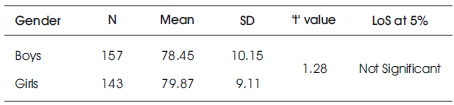
Table 1. Difference in the Self-concept of Higher Secondary Students in Terms of Gender
This study aims to investigate whether there is any significant difference found in the self-concept and self-regulation of higher secondary students in terms of gender, locality, and type of school and its relationship. In this normative survey, the samples were selected by using simple random technique from five higher secondary schools at Villupuram district, Tamil Nadu, India. A sample of 300 eleventh standard students during the academic year 2018-2019 was selected. The research tools consisted of individual data collection form and the Academic Self-Concept (ASC) Scale and Self- Regulation Scale. The data were analyzed with the help of IBM SPSS Statistics V21.0. For analyzing the data mean, standard deviation, t-test, F-test, and Pearson's product moment correlation were used as statistical techniques. Findings show that the higher secondary girls, urban students, and government-aided school students are found to be better in their self-concept and self-regulation, and low positive relationship is found between self-concept and self-regulation of higher secondary students.
We, the human beings, are born in the world not just to survive but for achieving success in our life. If we want to achieve something in the world, we have to know about ourselves first. We have to know our own strength and weakness and must develop positive and strong self-image of ourselves. Joyce Brothers (1927) insisted that a strong, positive self-image is the best possible preparation for success (as cited in Chang, 2006, p. 43). Self-image is related to self-concept, but is generally less broad (Ackerman, 2018). Rogers (1959) stated that self-image is a component of self-concept, along with self-esteem or self-worth and one's “ideal self” (as cited in McLeod, 2008). According to Baumeister (1999) self-concept is the individual's belief about himself or herself, including the person's attributes and who and what the self is. Rosenberg (1979) posited that self-concept is the totality of an individual's thoughts and feelings having reference to himself as an object. Markus and Nurius (1984) define self-regulation as the set of components, such as selfmonitoring, self-evaluation, self-reinforcement, and self-control, which constitute a dynamic process rather than as a single act or state. Self-concept is the conscious awareness of the individual's thinking, feelings, and beliefs about his/her own competence and self-regulation refers to the ability to regulate one's cognitive activities and behaviour in learning to achieve a goal. Self-concept and self-regulation are closely connected with and both are complementary to each other.
Puhan and Nibedita (2017) critically analyzed the impact of gender, locality, and self-concept on motivation of secondary school tribal students in Keonjhar district, Odisha and found that the tribal secondary school students do not differ in their self-concept with respect to gender and locality. Kumar (2016) conducted a study of self-concept of higher secondary students in Vellore district, Tamil Nadu, India, and found that higher secondary students do not differ significantly in their self-concept in terms of gender, locality, and they significantly differ in their self-concept in terms of type of management. Biswal (2016) carried out a study on self-concept of secondary school students in relation to their academic achievement in different districts of West Bengal and found that tribal secondary school students do not differ in their self-concept with respect to gender, locality, and nature of school. Chetri (2014) conducted a study on self-concept and achievement motivation of adolescents and their relationship with academic achievement in different schools of Sikkim and found that there is no significant difference in the self-concept of students with regard to gender, locale, and impact of type of school variations. Lawrence and Vimala (2013) carried out a study on self-concept and achievement motivation of high school students in Tirunelveli district, Tamil Nadu, India, and found that there was significant difference in the self-concept of high school students in terms of gender, locality, and type of school. Hundekar (2011) examined the self-concept and social maturity of urban and rural primary school children in Dharwad District, Karnataka and found that there was no significant difference in self-concept of primary school children in terms of gender and locality. Sarsani (2007) examined the relationship between self-concept and adjustment of secondary school students in Warangal City, Telangana, India, and found that secondary school students do not significantly differ in their self-concept in terms of gender and significantly differ in terms of type of school.
Lawrence and Saileela (2019) carried out a study on self-regulation of higher secondary students in relation to achievement in mathematics in Tirunelveli district, Tamil Nadu, India, and found that higher secondary students do not significantly differ in their self-regulation in terms of gender, locality and type of school. Kamalam and Annaraja (2015) studied the achievement in mathematics of high school students in relation to their academic self-regulation and study skills in Tirunelveli, Thoothukudi, and Kanykumari districts of Tamil Nadu, India, and found that there was a significant difference in the self-regulation of high school students in terms of gender, locality, and type of school. Stanly (2014) conducted a study on self-regulation of higher secondary students of Puducherry region and found that higher secondary students significantly differ in their self-regulation in terms of gender and locality. Aydin (2018) tried to find out the relationship between the spiritual intelligence characteristics and self-regulation skills of the Education Faculty students of Ahi Evran University, Kirşehir, Turkey and found that self-regulation skills do not differ by gender.
Saki and Nadari (2018) studied the relationship between self-regulated learning, academic self-concept, and the academic achievement motivation of students in the second grade of high school in Khorramabad city, Iran and found that there was a positive relationship between self-concept, self-regulated learning, and academic achievement motivation.
The adolescence is the period of stresses and storms, during which enormous developmental changes takes place within the individual like the way he/she thinks, feels, looks, and behaves, etc. It is the stage of high risk, where newfound freedoms can results in decisions that drastically open up or close off life opportunities (Lawrence & Vimala, 2013). Jersild (1963) says that "adolescence is the period of time when the surge of life reaches its highest peak. The adolescent's life is, or might be, full of opportunity to enter into new experience, to explore new relationship, to feel new resources of inner strength and ability”. As this stage is the stepping stone of life, the adolescents should have a clear goal setting, intrinsic motivation, and self-confidence, so that he/she will reach the peak in their future. In order to reach great heights in life, adolescents have to feel good and regulate themselves in a good manner. In school and college days, all adolescents, i.e., students are influenced by a need to achieve and all of them want to be successful in their life. Since, it is affected in different degrees, achievement, and successful life is not possible for all of them. Students who have high self-concept may develop high level of intrinsic motivation within themselves which leads to great achievement. Simultaneously, students who have good self-image and high self-confidence may fail in their life due to improper or incapable self-regulation. Therefore, self-concept and self-regulation is very important for successful and happy life of adolescents/students. Hence, the authors conducted a study for trying to find out the relationship between self-concept and self-regulation of higher secondary students.
This study adopted the normative survey method. The samples were selected by using simple random technique from five higher secondary schools at Villupuram district, Tamil Nadu, India. A sample of 300 eleventh standard students during the academic year 2018-2019 was selected. The research tools consisted of individual data collection form and the Academic Self- Concept (ASC) Scale by Liu and Wang (2005) and Self- Regulation Scale by Saileela (2012). The individual information forms included questions about gender, locality, and type of school.
The Academic Self-Concept Scale consists of 19 items including 10 positive and 9 negative items. Responses are based on seven options Likert scale that include “Strongly Agree”, “Agree”, “Agree Somewhat”, “Undecided”, “Disagree Somewhat ”, “Disagree”, and “Strongly Disagree” which are scored from seven to one for the positive items. Negative items 2, 4, 7, 9, 11, 13, 15, 16 and 19 were scored inversely. The internal consistency (α) or validity of the ASC scale was 0.83–0.86 (Liu, Wang & Parkins, 2010).
The Self-Regulation Scale (SR Scale) consists of 42 items including 38 positive and 4 negative items. The Likert scale has five alternate responses such as “Strongly Agree”, “Agree”, “Undecided”, “Disagree”, and “Strongly Disagree”. The 38 positive items were scored from five to one and the four negative items (2, 4, 16, and 18) were scored vice-versa. The face and content validity of SR Scale was verified by the experts and teacher educators. The reliability was established by Test-retest and found to be 0.87.
As to get the accurate and reliable data for this study, a copy of the research tools were given to the students with proper instruction and collected after the completion. The collected data were scored and tabulated in the Microsoft Office Excel 2007 for analysis. The tabulated data were analyzed with the help of IBM SPSS Statistics V21.0. For analyzing the data mean, standard deviation, t-test, F-test, and Pearson's product moment correlation were used as statistical techniques. The analyzed data were tabulated and interpreted as below.
H01: There is no significant difference between higher secondary boys and girls in their self-concept.
It is inferred from Table 1 that the mean scores of boys and girls were found to be 78.45 and 79.87 and standard deviation were found to be 10.15 and 9.11. The calculated 't' value (1.28) is lesser than the table value (1.96) at 5% level of significance. Therefore, the null hypothesis is accepted and it is concluded that there is no significant difference between higher secondary boys and girls in their self-concept.
Table 1. Difference in the Self-concept of Higher Secondary Students in Terms of Gender
H02: There is no significant difference between rural and urban higher secondary students in their self-concept.
It is inferred from Table 2 that the mean score of rural and urban students were found to be 79.05 and 79.18 and standard deviation were found to be 9.59 and 9.86. The calculated 't' value (0.12) is lesser than the table value (1.96) at 5% level of significance. Therefore, the null hypothesis is accepted and it is concluded that there is no significant difference between rural and urban higher secondary students in their self-concept.
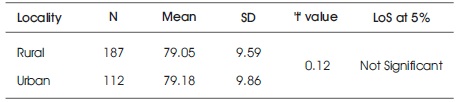
Table 2. Difference in the Self-concept of Higher Secondary Students in Terms of Locality
H03: There is no significant difference among government, government aided, and private higher secondary school students in their self-concept.
It is inferred from Table 3 that the mean score of government, government-aided students, and private school students were found to be 78.29, 79.30, and 77.80 and standard deviation were found to be 9.95, 9.24, and 11.24 respectively. The calculated F-value (0.39) is lesser than the table F-value (3.09) at 5% level of significance. Therefore the null hypothesis is accepted and it is concluded that there is no significant difference among government, government aided and private higher secondary school students in their self-concept.
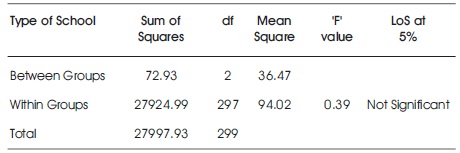
Table 3. Difference in the Self-concept of Higher Secondary Students in Terms of Type of School
H04: There is no significant difference between higher secondary boys and girls in their self- regulation.
It is inferred from Table 4 that the mean score of boys and girls were found to be 162.38 and 169.25 and standard deviation were found to be 32.02 and 31.06. The calculated 't' value (1.88) is lesser than the table value (1.96) at 5% level of significance. Therefore, the null hypothesis is accepted and it is concluded that there is no significant difference between higher secondary boys and girls in their self-regulation.
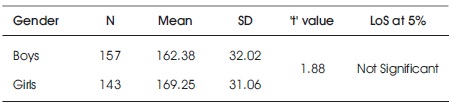
Table 4. Difference in the Self-regulation of Higher Secondary Students in Terms of Gender
H05: There is no significant difference between rural and urban higher secondary students in their self-regulation.
It is inferred from Table 5 that the mean score of rural and urban students were found to be 164.32 and 168.31 and standard deviation were found to be 30.99 and 32.68. The calculated 't' value (1.04) is lesser than the table value (1.96) at 5% level of significance. Therefore, the null hypothesis is accepted and it is concluded that there is no significant difference between rural and urban higher secondary students in their self-regulation.
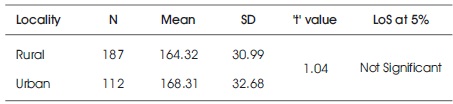
Table 5. Difference in the Self-regulation of Higher Secondary Students in Terms of Locality
H06: There is no significant difference among government, government aided, and private higher secondary school students in their self-regulation.
It is inferred from Table 6 that the mean score of government, government-aided students and private school students were found to be 165.55, 172.67, and 153.98 and standard deviation were found to be 31.39, 30.36, and 32.64 respectively. The calculated F-value (4.54) is greater than the table F-value (3.09) at 5% level of significance. Therefore the null hypothesis is rejected and it is concluded that there is a significant difference among government, government aided, and private higher secondary school students in their self-regulation.
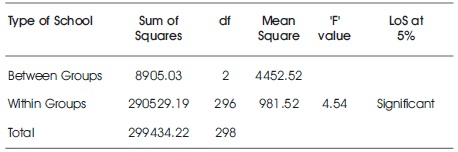
Table 6. Difference in the Self-regulation of Higher Secondary Students in Terms of Type of School
H07: There is no significant relationship between self- concept and self-regulation of higher secondary students.
It is inferred from Table 7 that the calculated value (0.34) is greater than the table γ-value (0.095) at 1% level of significance Evans (1996) suggests for the absolute value of ‘γ' between 0.20 and 0.39 is 'weak or low positive correlation'. Therefore the null hypothesis is rejected and it is concluded that there is a significant relationship between self-concept and self-regulation of higher secondary students.

Table 7. Relationship between Self-concept and Self-regulation of Higher Secondary Students
From this study it is found that there is no significant difference in the self-concept of higher secondary students in terms of gender. This finding confirms the findings of Hamed, Hussin, and Jam (2017), Puhan and Nibedita (2017), Kumar (2016), Biswal (2016), Babu and Krishnamoorthy (2016), Gupta and Thapliyal (2015), Chetri (2014), Hundekar (2011,) and Sarsani (2007), and contradicts the findings of Nadaf (2018a, 2018b), Ahmad (2017), Jaiswal and Choudhuri (2017), Lawrence and Vimala (2013). When comparing the mean scores, higher secondary girls (79.87) are found to be better than boys (78.45) in their self-concept. This may be due to the fact that the girls are also getting equal importance like boys in their family and school and they are committed, dedicated to their studies and studying confidently for achieving higher scores for better future.
It is found that there is no significant difference in the self-concept of higher secondary students in terms of locality. This finding substantiates the findings of Nadaf (2018a, 2018b), Puhan and Nibedita (2017), Kumar (2016), Biswal (2016), Chetri (2014), and Hundekar (2011), and contravenes and contradicts the finding of Lawrence and Vimala (2013). When comparing the mean scores, urban (79.18) students are found to be better than the rural (79.05) higher secondary students in their self-concept. This may be due to the fact that urban students are exposed to several newest facilities and get vast experiences in their life.
It is also found that there is no significant difference in the self-concept of higher secondary students in terms of type of school. This finding confirms the finding of Chetri (2014) and contradicts the findings of Kumar (2016), Lawrence and Vimala (2013), and Sarsani (2007). When comparing the mean scores, government-aided (79.30) school students are found to be better than the government (78.29) and private (77.80) higher secondary school students. This is due to the fact that the government-aided schools have adequate instructional and infrastructural facilities which create a conducive environment for studies.
The mean scores of higher secondary boys, rural students, government and private school students are lower than the total mean score (79.13) of the sample and deviate more than the total standard deviation (9.68) of the sample in their self-concept.
And also, there is no significant difference in the self-regulation of higher secondary students in terms of gender. This finding corroborates the finding of Lawrence and Saileela (2019), Aydin (2018), Kaur and Kumar (2014) and contradicts the finding of Kamalam and Annaraja (2015), Stanly (2014), and Gupta and Kumar (2012). When comparing the mean scores, girls (169.25) are found to be more self-regulated than the higher secondary boys (162.38), which support the finding of Morales (2014). This may be due to the fact that girls are expected to maintain more disciplined behaviour in the school and the home than the boys. They are also often instructed about the do's and don'ts by the parents, family members, teachers and wherever they may go they are under surveillance by the members of the society.
There is no significant difference in the self-regulation of higher secondary students in terms of locality. This finding supports the finding of Lawrence and Saileela (2019) and opposes the finding of Kamalam and Annaraja (2015), and Stanly (2014). When comparing the mean scores, urban (168.31) students are found to be better than the rural (164.32) higher secondary students in their self-regulation. This may be due to the fact that the urban students have more exposure to the latest technologies and they are having more facilities to improve their knowledge and skills than the rural students. Moreover, they are always demanded to set their goal and plan for achieving that goal in this competitive world.
Higher secondary students differ in their self-regulation in terms of type of school. This finding supports the finding of Kamalam and Annaraja (2015) and opposes the finding of and Lawrence and Saileela (2019). When comparing the mean scores, government-aided (172.67) students are found to be better than government (165.55) and private (153.98) school students in their self-regulation. This may be due to the fact that the government-aided schools are giving training to the students for the development of their life skills and provide adequate facilities at the schools. They are expected to achieve high goals and get more marks with freedom, and allowed to enjoy their day-to-day life activities.
The mean scores of higher secondary boys, rural students, government and private school students are lower than the total mean score (165.67) of the sample and deviate more than the total standard deviation (31.70) of the sample in their self-regulation.
From the correlation analysis it is found that there is a low positive relationship between self-concept and self-regulation of higher secondary students. This finding confirms the finding of Saki and Nadari (2018). This may be due to the fact that the students who have the knowledge of his/her thought, feelings, and capabilities can regulate themselves systematically according to his/her goal.
From this study it is derived that the higher secondary girls, urban students, and government-aided school students are found to be better in their self-concept and self-regulation. It is also found that there is a low positive relationship between self-concept and self-regulation of higher secondary students. Hansford (1994) also confirms that the self-concept includes both the learner's belief that he/she possesses the necessary knowledge, skills, and abilities for his/her self-regulation, and an image of himself/ herself as a self-regulator. McCombs (1989) says domain-specific self-concept in the context of self-regulation can be understood as the beliefs and perceptions that the individual holds regarding his ability to direct and control their cognition, affect, motivation, and behavior in a particular learning situation. The effectiveness of the individual on any learning task is determined by his/her beliefs and his/her images of himself/herself as a self-regulated learner, “able to direct and control [his/her] learning processes competently in that domain and context” (p.61). Therefore, it is concluded that the self-regulation of higher secondary students can be improved by improving their self-concept.
The parents, family members, and teachers should develop positive self-concept among the students by giving individual attention over the students, giving importance to them by hearing their views and ideas, and respect them and praising their good words, feelings and deeds. Myers-Walls, Hinkley, and Reid (2015) suggested the PRAISE technique for improving the self-concept among children.
P - Praise yourself, and help others to do the same
R - Respect children
A - Accept children
I - Invest time in children
S - Set reasonable goals
E - Evaluate your accomplishments realistically.
Everyone who relates with the child have to be involved in the line of developing self-concept of the child, so that he/she can develop the potentiality to regulate themselves effectively.